
The Over Under
30 March 2026Agility and explosive movement
Agility isn’t about being an athlete. It’s what catches you when you trip on a curb, lets you dodge a cyclist on a sidewalk, and keeps you moving confidently through a world that doesn’t slow down for you. The Over Under tests what your body does when the demands change fast.
THE SCIENCE
As agility declines with age, so does gait speed. And gait speed turns out to be one of the most reliable predictors of how long you’ll live. In a pooled analysis of over 34,000 older adults published in JAMA, every 0.1 m/s increase in walking speed was associated with roughly 12% lower mortality risk. At age 75, predicted 10-year survival ranged from 19% to 87% in men depending on how fast they walked. The CDC’s STEADI framework uses functional agility tests like the 30-second chair stand as clinical predictors of fall risk, cardiac events, and lung function. When your agility goes, your confidence goes with it, and less confidence means less movement, which accelerates the whole cycle.
The trial
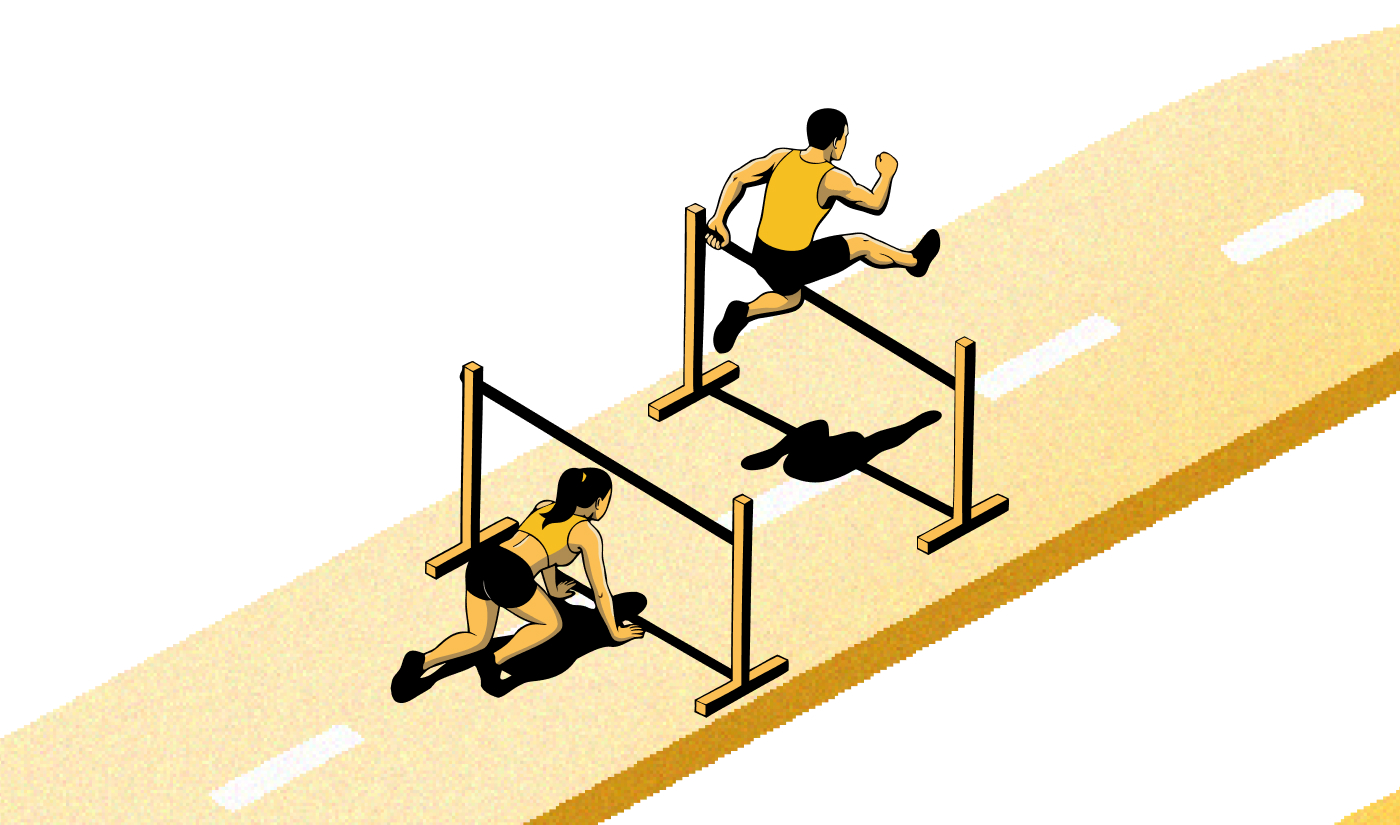
You’ll navigate a custom obstacle course of four gates set 10 meters apart, alternating between crawling under and getting over each one. Run to the turnaround point and return back through to finish.
HOW TO TRAIN
Anything that forces you to change direction. Weighted carries with turns and pivots. Shuttle runs. Lateral shuffles. Cone drills. And controlled up-downs: getting from standing to the floor and back with speed and intention. The goal isn’t straight-line fitness. It’s the ability to react, adjust, and keep moving when life throws something at you.