
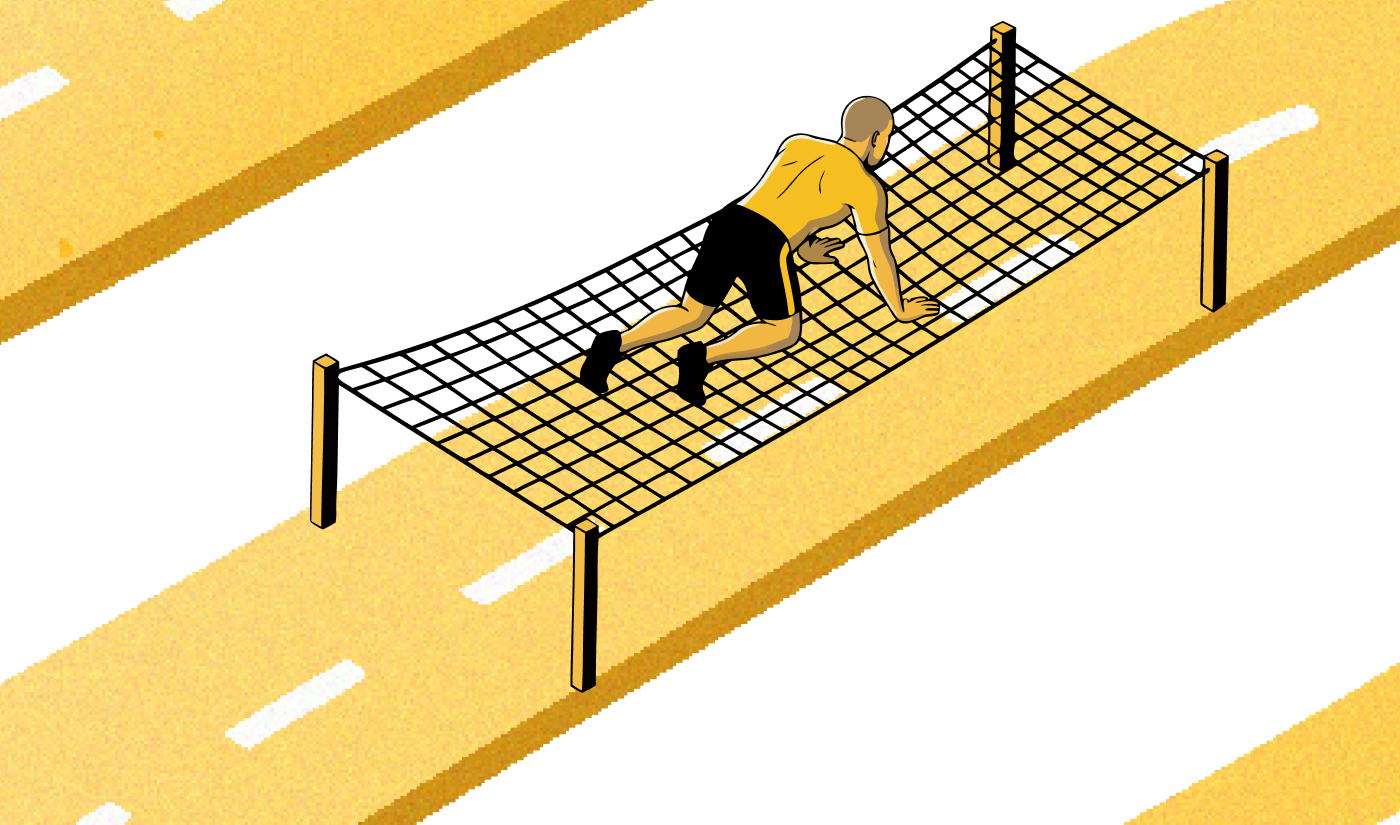
The Net
30 March 2026Functional strength and coordination
You might be able to deadlift impressive numbers, but can you carry two bags of groceries up three flights of stairs while holding a door open with your foot? Functional strength is the ability to apply your strength to real-world movement patterns: climbing, carrying, reaching, rotating, getting up off the floor. The Net tests whether your strength actually works when the movement gets complex.
THE SCIENCE
The WHO Healthy Ageing framework defines functional capacity as the ability to perform the movements required for independent living, and names its loss as the event that effectively ends healthspan. Researchers at the Buck Institute put it this way: even something as “simple” as walking is dazzlingly intricate, requiring precise coordination between muscles, joints, and the nervous system. (They point out that early robotics struggled to make machines walk, despite giving them superhuman strength.) And here’s a compelling data point: a study of over 80,000 British adults found that people who play racquet sports, which demand multi-directional, reactive, full-body coordination, had a 47% lower risk of all-cause mortality compared to non-participants.
The Trial
Participants crawl across a 40-foot horizontal cargo net suspended a few feet off the ground. No rolling allowed. Your entire body stays engaged from start to finish. Your score is based on how quickly you reach the other side.
HOW TO TRAIN
Train movements, not muscles. Loaded carries, Turkish get-ups, crawling patterns, multi-directional lunges, anything that combines pushing, pulling, carrying, and rotating in the same session. If you play a sport, keep playing it. Racquet sports are especially good. And don’t underestimate the value of simply getting up and down off the floor regularly. If that’s getting harder, that’s information worth having.