
The Inferno
30 March 2026VO2 max and cardiovascular capacity
VO2 max is the maximum amount of oxygen your body can process during exercise. It integrates cardiovascular health, lung capacity, and mitochondrial function into a single number, and it’s the single strongest predictor of how long you’ll live well. You can’t supplement your way to a higher VO2 max. You can’t hack it. As Nathan Price, PhD at the Buck Institute puts it: “You can’t gimmick it. You can’t take a pill and see your VO2 Max shoot up.” You earn it. The Inferno pushes yours to its ceiling.
THE SCIENCE
In a study of over 122,000 patients published in JAMA Network Open, low cardiorespiratory fitness was a stronger predictor of death than smoking, diabetes, or hypertension, and the researchers found no upper limit of benefit. A 46-year follow-up study published in JACC found that each 1 ml/kg/min increase in VO2 max was associated with a 45-day increase in lifespan. And the largest CRF-mortality dataset to date, covering over 750,000 people, confirmed that each 1-MET increase in fitness is linked to a 13-15% reduction in mortality risk, regardless of age, sex, BMI, or existing health conditions. The evidence here isn’t just strong. It’s overwhelming.
THE Trial
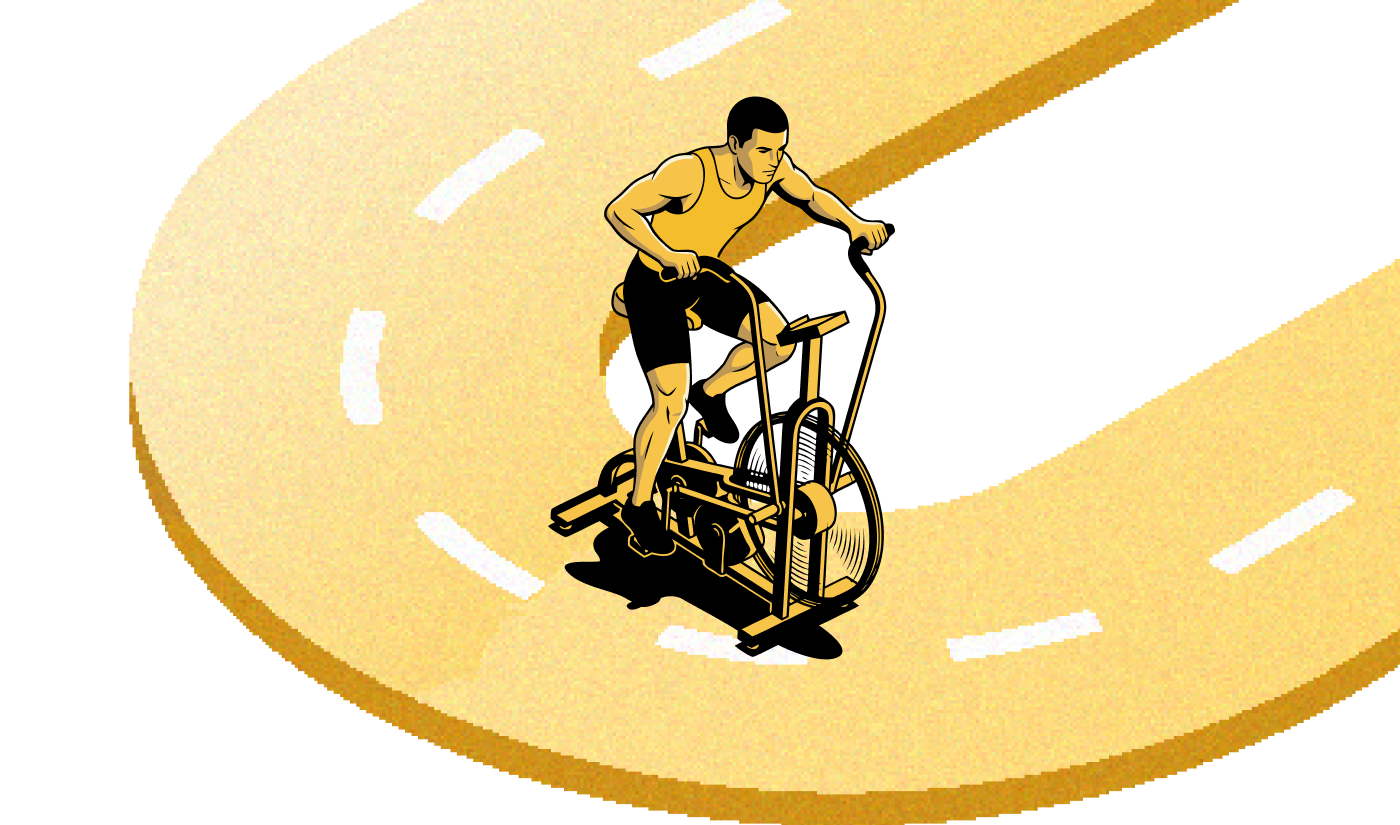
You’ll hop on a stationary bike for four minutes, and pedal at your strongest sustainable effort. Your estimated VO2 max is calculated from your body-weight-adjusted power output.
HOW TO TRAIN
Two types of cardio matter most. Zone 2 training (moderate intensity, where you can just barely hold a conversation) builds new mitochondria and should make up the bulk of your weekly cardio. The CDC recommends 150 minutes per week. High-intensity interval training pushes your existing capacity higher: alternate between bouts of near-max effort and recovery. If you’re new to this, even small improvements create dramatic shifts in your risk profile. That’s the beauty of VO2 max: the biggest gains come when you’re just getting started.